What is a debt-service coverage ratio, and how is it used?
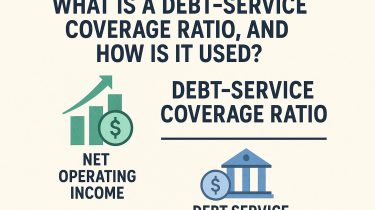
Understanding the Debt-Service Coverage Ratio (DSCR)
The Debt-Service Coverage Ratio (DSCR) is a crucial financial metric utilized in assessing a company’s capacity to meet its debt obligations. By dividing net operating income by total debt service, the DSCR provides valuable insights into the financial condition and sustainability of a business or entity.
Formula and Calculation
The formula for calculating DSCR is:
DSCR = Net Operating Income / Total Debt Service
Net Operating Income represents the company’s earnings before interest and taxes. It serves as a measure of the cash flow available to pay off debts. On the other hand, Total Debt Service consists of all payments due in a specific period, including principal, interest, sinking funds, and lease payments.
Interpreting DSCR
A DSCR greater than 1 indicates that the company generates adequate income to cover its debt obligations. Specifically, if the ratio is 1.5, it implies that the company has a cushion, retaining 50% of its income after satisfying debt commitments. Conversely, a DSCR less than 1 suggests potential challenges for the company in meeting its debt payments using current income levels.
The Importance of DSCR
The DSCR plays a significant role for lenders, investors, and financial analysts who often rely on it to evaluate the creditworthiness of a business entity. A robust DSCR can be a precursor to a company’s long-term viability and financial resilience. It indicates that the business is managing its debt obligations responsibly, without undue strain on its financial resources.
This ratio provides a lens through which stakeholders can determine whether a business is over-leveraged or operating within a sustainable financial model. A company with a high DSCR is generally perceived as financially sound, likely ensuring repayments on borrowed funds. This is essential not only for securing external financing but also for boosting investor confidence.
Applications in Real Estate and Corporate Finance
In the realm of real estate, particularly concerning commercial property investments, the DSCR is a vital metric. Lenders often utilize the DSCR to assess the feasibility of financing a property. A higher DSCR is preferred, as it assures lenders that the borrower can comfortably manage loan repayments, thereby reducing the perceived risk associated with the loan.
In corporate finance, companies demonstrating a consistently high DSCR may enjoy advantageous loan terms. It reflects positively on their financial management practices, suggesting they efficiently manage leverage and cash flows. Such a company may attract better loan conditions, enhancing its ability to fund further growth ventures.
Limitations of DSCR
Despite its utility, the DSCR is not a standalone metric for decision-making. Its reliance on net operating income can introduce limitations, particularly if the income calculations are influenced by non-cash items or one-time, extraordinary expenses. Consequently, while the DSCR provides useful information, it is often analyzed alongside other financial metrics for a comprehensive assessment of a company’s financial health.
To explore more about how the DSCR contributes to decision-making, financial stability assessments, and comparative analyses, you can visit this dedicated resource.
Broader Implications of DSCR
The implications of maintaining a healthy DSCR extend beyond payment of debts. Companies with strong DSCRs can pursue expansion opportunities more effectively and ensure smooth operational continuity. Moreover, stakeholders such as shareholders and potential investors often perceive high DSCR as a signifier of prudent financial management, which could enhance the company’s market valuation.
Furthermore, regulators might also examine DSCRs when assessing the systemic risk a company poses to the broader economic system. Companies within crucial sectors, particularly those with significant debt, could wield substantial influence over economic stability. Thus, understanding and monitoring DSCR can be a pivotal part of economic safeguarding from a macroeconomic perspective.
Concluding Thoughts
In summary, the Debt-Service Coverage Ratio is a critical tool in financial analysis, deeply impacting real estate, corporate finance, and broader economic assessments. While serving as a key indicator of a company’s debt-repaying capability, its limitations necessitate a comprehensive approach, analyzing it alongside other financial tools. Harnessing the power of DSCR can pave the way for sustainable financial practices and ensure business resilience in the face of economic challenges.