The impact of inflation on loan interest rates.
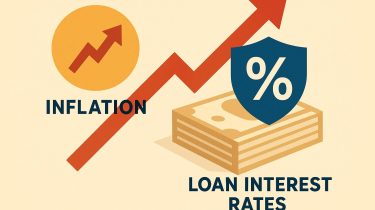
The Relationship Between Inflation and Loan Interest Rates
Inflation is a crucial economic factor that affects various aspects of financial markets, including loan interest rates. Understanding the connection between inflation and interest rates is essential for both borrowers and lenders.
Understanding Inflation
Inflation refers to the rate at which the general level of prices for goods and services rises, leading to a decrease in the purchasing power of a currency. Central banks, like the Federal Reserve in the United States, closely monitor inflation as part of their monetary policy to maintain economic stability. This involves adjusting key interest rates to influence economic activity and ensure that inflation remains within a target range. Inflation can result from various factors, such as increased demand for goods, higher production costs, or expansionary monetary policies that increase the money supply.
How Inflation Affects Interest Rates
Inflation and interest rates are interlinked primarily due to the role of central banks. These institutions adjust interest rates to control inflation. When inflation rises, several mechanisms come into play that collectively drive the adjustments in interest rates.
Central Bank Response: Central banks may increase interest rates to curb spending and borrowing. Higher rates tend to reduce the money supply within an economy, thereby slowing down inflationary pressures. This is because when borrowing costs are higher, both consumer spending and business investment tend to decrease, which can help prevent the economy from overheating.
Cost of Borrowing: Higher inflation leads to increased interest rates on loans, as lenders demand higher returns to compensate for the reduced purchasing power of future interest payments. This increases the cost of borrowing for consumers and businesses. Essentially, the interest rate serves as a mechanism for lenders to ensure that they receive a return on their loan that exceeds the rate of inflation, thus preserving the value of their profits over time.
In an environment of rising inflation, lenders become more cautious, adjusting their risk assessments and often demanding additional collateral or stricter borrowing terms. The logic is straightforward: in times of inflation, the value of money diminishes, making it crucial for lenders to protect their interests.
Long-Term Effects of Inflation on Loans
Over the long term, sustained high inflation can significantly impact loans in several important ways. Understanding these effects is essential for both borrowers and lenders to strategically navigate financial challenges.
Fixed vs. Variable Rates: Borrowers with variable interest rate loans may experience fluctuations in their payments as rates change in response to inflation. Interest rates on such loans are often tied to benchmark rates or indices, which are influenced by central bank policies. When inflation rises, these benchmark rates often increase, leading to higher loan repayments for borrowers.
On the other hand, fixed-rate loans might be more favorable during inflationary periods, as they maintain a consistent rate over time. Borrowers can benefit from fixed rates when they lock in relatively low rates before significant increases in inflation. This stability provides predictability in loan repayments, allowing borrowers to plan their finances more effectively.
Loan Accessibility: As interest rates rise, loans may become less accessible to borrowers with lower credit scores or those seeking large amounts of financing. Lenders become more cautious, tightening credit standards to mitigate risks associated with inflation. This can result in higher credit requirements, larger down payment demands, and greater scrutiny of borrowers’ financial histories. As a consequence, certain segments of the population may find it increasingly difficult to secure financing during inflationary periods.
Additionally, businesses looking for expansion or capital investment may face higher finance costs, which could lead to a slowdown in economic growth. Companies may cut back on investment or defer new projects due to the increased cost of borrowing, potentially affecting employment and broader market conditions.
Interest Rate Sensitivity
Interest rate sensitivity refers to how responsive borrowers, lenders, and investors are to changes in interest rates. In periods of inflation, this sensitivity becomes particularly pronounced as stakeholders adjust their behaviors based on changing costs and returns in the economy.
Investors, for instance, may shift their portfolios to fixed-income securities that offer higher yields when interest rates rise, while borrowers might seek to refinance existing debt to lock in more favorable terms before further rate hikes. Understanding the dynamics of interest rate sensitivity is crucial for financial planning and risk management, especially in volatile economic periods marked by inflation.
Conclusion: Monitoring Economic Indicators
For anyone involved in borrowing or lending, keeping a close eye on economic indicators like inflation rates and central bank policies is crucial. Understanding these dynamics can help in making informed financial decisions. For more detailed insights, one might consider exploring resources provided by financial institutions or government economic reports, such as those available through the Federal Reserve.
In summary, inflation plays a significant role in shaping loan interest rates and affects both individual borrowers and the broader economic landscape. By comprehending the complex relationship between inflation and interest rates, stakeholders can better navigate economic challenges and take advantage of opportunities that arise in different inflationary contexts. This understanding is vital for effective financial planning and strategy development, ensuring that actions are aligned with prevailing economic conditions.