How equipment leasing differs from loans.
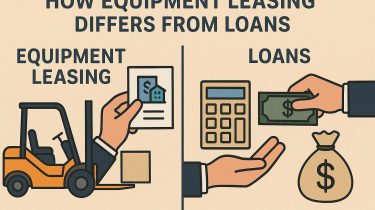
Understanding Equipment Leasing and Loans
When businesses require new equipment, they often face the decision of whether to lease or buy through a loan. Though both options can facilitate acquiring necessary assets, they have distinct characteristics that may influence a company’s choice. Below, we’ll delve deeper into how equipment leasing differs from loans and the implications of each option.
Definition and Structure
Equipment Leasing involves an agreement where the lessee has the right to use equipment owned by the lessor for a specified period. The lessee pays regular rental payments over the term of the lease. Once the term expires, the equipment is typically returned to the lessor. There may, however, be options for the lessee to renew the lease, purchase the equipment, or upgrade to new equipment based on the terms initially agreed upon.
In contrast, a Loan involves borrowing funds to purchase equipment outright. This process requires the borrower to repay the principal amount along with interest over a predetermined term. Once the loan is repaid, the borrower gains full ownership of the equipment, which can be an essential factor for businesses planning for long-term utilization of their assets.
Ownership and Equity
The primary distinguishing factor between leasing and loans is ownership. In the context of equipment leasing, ownership remains with the lessor for the duration of the lease. Conversely, when a company secures a loan to purchase equipment, ownership of the asset transfers to the borrower upon fulfillment of all repayment obligations. This structure allows businesses opting for a loan to build equity in the equipment, an advantage that leasing does not offer.
With leasing, companies that regularly upgrade their technological or mechanical assets can maintain access to the latest equipment without the full responsibility of ownership. This helps reduce the risks associated with obsolete technology and provides an ongoing flexibility that appeals to rapidly evolving industries.
Financial Impact
In terms of financial implications, leasing offers notable financial flexibility. Lease payments typically cover the rental cost of the equipment rather than the full purchase price, resulting in generally lower periodic payments compared to traditional loan repayments. This can contribute to improved cash flow, as businesses are able to allocate available funds to other operational priorities.
Lower lease payments, however, come with a tradeoff. The lessee does not acquire ownership, meaning that long-term financial benefits such as equity are not inherent in lease agreements. In contrast, loan-financed equipment results in the acquisition of the asset, which holds incremental value as a financial asset. Once the loan is completely paid, businesses can capitalize on their investment, either through continued equipment use, resale, or using it as collateral for additional financing.
Tax Implications
Tax considerations are critical when evaluating equipment leasing and loans. Lease payments generally qualify as operational expenses and may be fully deductible. This can result in significant tax advantages, as deducting lease payments can reduce overall taxable income annually.
On the other hand, acquiring equipment through a loan allows businesses to depreciate the asset over its useful life. This depreciation enables companies to deduct a portion of the equipment’s value each year, which can provide a steady tax advantage over time. Additionally, interest paid on loans may also be tax-deductible, offering further financial benefits to businesses that choose to purchase equipment outright.
Flexibility and Contract Terms
Flexibility in terms of upgrades and replacements represents a considerable advantage of leasing. As industries often face rapid technological changes, the ability to upgrade or replace equipment within the terms of a lease can ensure that businesses remain competitive. Many lease agreements specifically cater to this need by including provisions for equipment upgrades during or at the conclusion of a lease term.
In the case of loans, companies are often tied to the equipment for the full duration of the loan term, regardless of technological advancements. This commitment can prove disadvantageous if the equipment becomes obsolete before the loan is repaid.
Considerations for Choosing Between Leasing and Loans
You should weigh several considerations when deciding between equipment leasing and loans. These factors include cash flow requirements, anticipated needs for technological upgrades, and overarching financial and tax strategies. Conducting a thorough evaluation of these differences helps organizations align their choice with both their operational objectives and financial goals.
By factoring in the specifics of their distinct circumstances, businesses can make an informed choice that best supports their strategic aspirations. For situations where deeper analysis may be necessary, consulting with a financial advisor or accountant is advisable. These professionals can provide customized advice tailored to the unique needs and growth projections of each business.